Learn More About Your Septic System
Understanding how your septic system works helps you maintain it properly and avoid costly repairs. Explore our diagrams and educational content below.
Six Decades of Septic Expertise
At Miller Bartz Septic in Durand, MI, we have over six decades of experience that we will use to ensure your system is running properly. We understand that septic tanks can be a confusing topic which is why we will also help educate you throughout the entire process.
Our team is committed to helping homeowners understand their septic systems so they can make informed decisions about maintenance and care.
What Are Septic Systems?
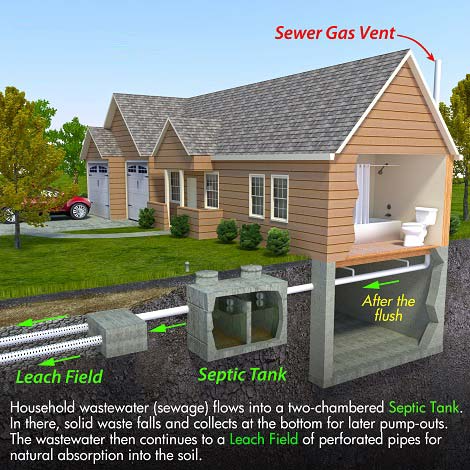
Septic systems are common in rural areas without a centralized sewer system. A typical system consists of a septic tank and drain field (also called a leach field). The diagram below illustrates how a complete septic system works from your home to the soil.
System Components
A typical septic system includes:
- Inlet pipe from house
- Septic tank (one or two compartments)
- Outlet pipe to drain field
- Drain field (leach field)
Pre-1978 vs. Modern Systems
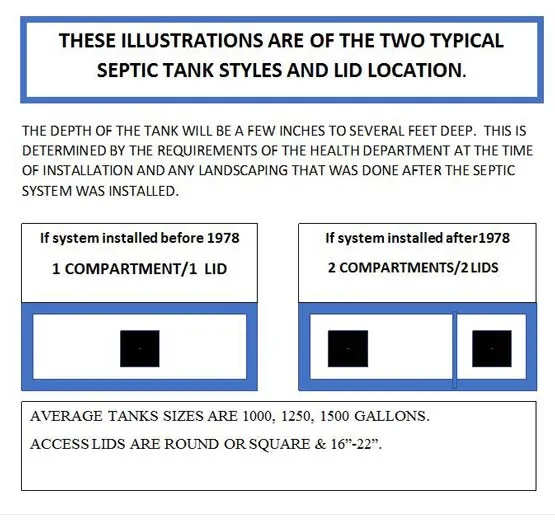
If your septic system was installed before 1978, there might only be one chamber. Modern systems installed after 1978 typically have two compartments for better waste separation and treatment.
How Do Septic Systems Work?
Household wastewater flows into a two-chambered septic tank. In there, solid waste falls to the bottom for later pump-out, while the liquid rises to the top and is pumped out through the drain field for natural absorption into the soil.
Wastewater Flow
Wastewater enters the first chamber where solids settle to the bottom. Liquids flow to the second chamber and then out to the drain field where soil naturally filters and absorbs the effluent.
Natural Treatment
The soil in your drain field acts as a natural filter, removing harmful bacteria and pollutants before the water returns to the groundwater system.
Septic Tank Styles & Lid Location
These illustrations show the two typical septic tank styles and lid locations. The depth of the tank will be a few inches to several feet deep, determined by the requirements of the health department at the time of installation and any landscaping that was done after the septic system was installed.
Tank Sizes
Average tank sizes are:
- 1000 gallons
- 1250 gallons
- 1500 gallons
Access Lids
Access lids are round or square and typically measure 16" to 22" in diameter. Knowing where your lids are located can save time and money during service calls.
How Often Should Septic Systems Be Cleaned?
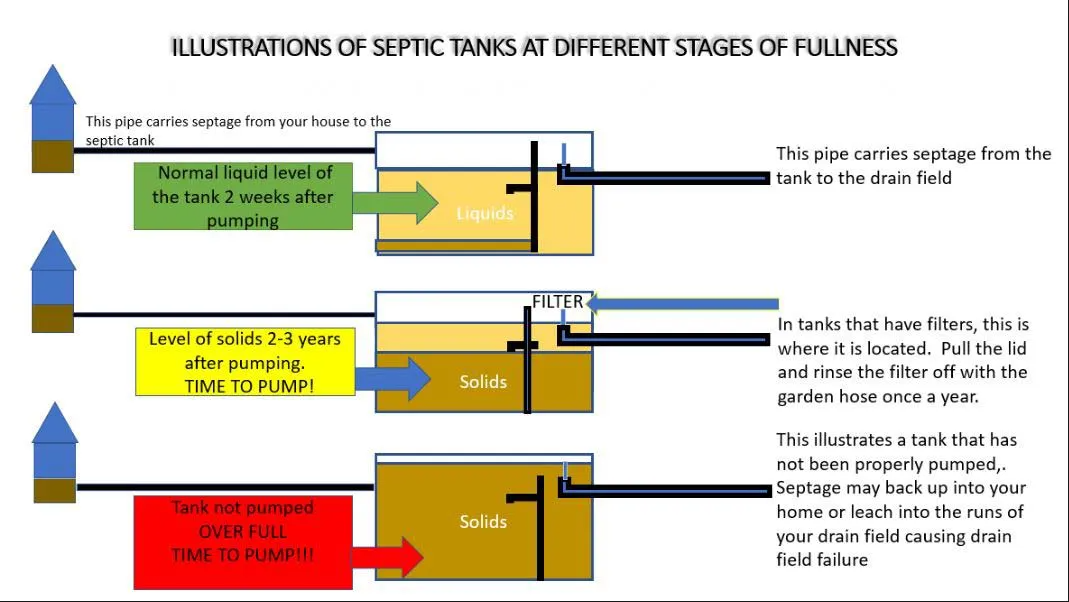
These illustrations show septic tanks at different stages of fullness. Regular pumping prevents solids from reaching your drain field, which can cause expensive system failure.
Recommended Schedule
We generally recommend your septic tank be pumped every three years. After your first pump, we can tell you when it should be pumped again based on your tank size and household usage.
Warning Signs
If a tank is not pumped properly, septage may back up into your plume or leach into the runs of your drain field, causing drain field failure. This can be very expensive to repair.
Need More Information?
Miller Bartz Septic provides prompt and professional services to residential, farm, and commercial septic systems. We enjoy what we do and take no shortcuts in caring for your septic system.